From the archive: How has phone hacking changed the relationship between politics and the press?
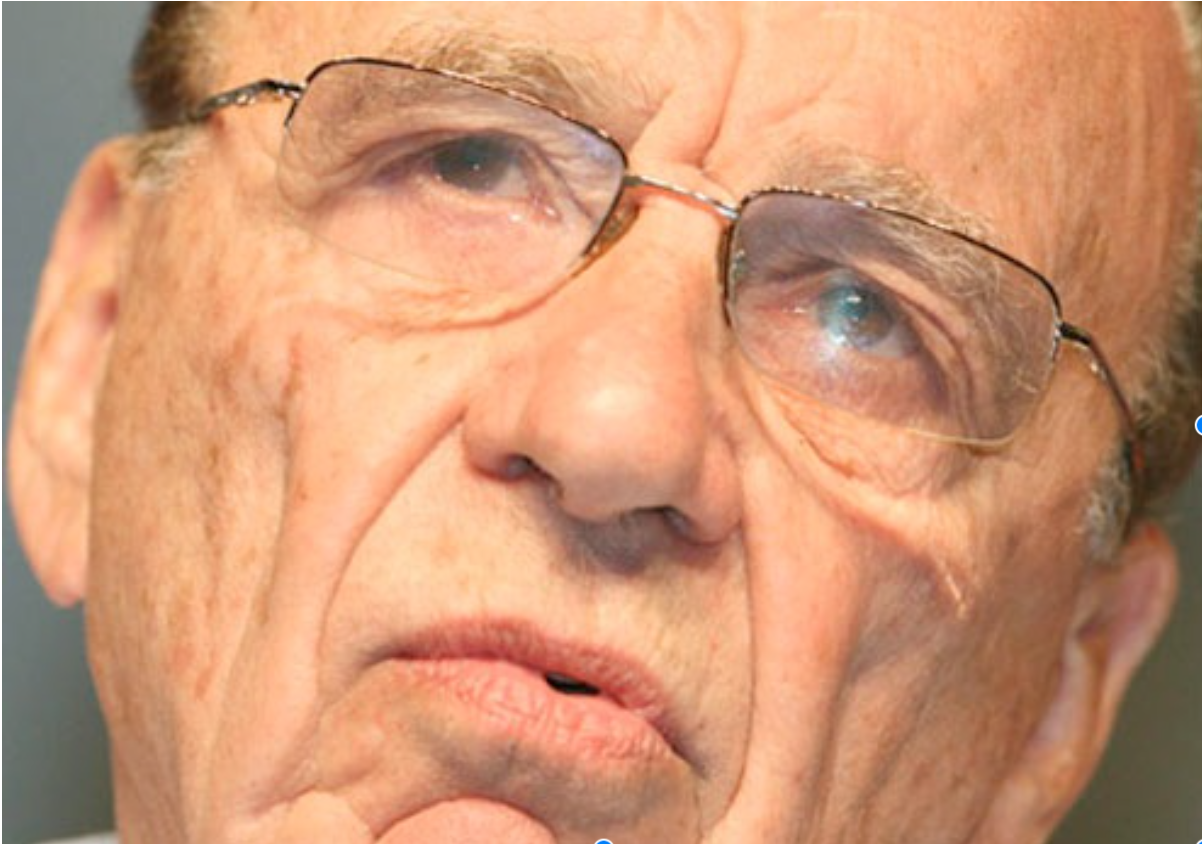
I have been rummaging in my archive again. During 2011, I wrote a series of articles for an online political magazine, DeAlign. This piece on Rupert Murdoch, phone hacking and the relationship between press ownership and our politics, seems particularly relevant given Jeff Bezos' recent edict to his Washington Post staff about what will and will not be discussed in his op-ed pages. At the same time, our gaze falls once more on the Murdoch family as Rupert seeks to disenfranchise his more liberal children from their commercial inheritance in order to preserve the conservative, Trump-cheering position of his media empire now led by his favoured son, Lachlan.
I thought the scandal of phone hacking would change things (I am, at heart, an optimist). The Leveson Inquiry Part I helped shift the discourse a little but the refusal to pursue Leveson II was cowardly. So here we are, fourteen years later, with a new bunch of billionaires using the control of a new bunch of media to exert influence on our politics, ensure favourable treatment of their business interests, and further line their already bulging pockets.
**
12th July, 2011
The phone-hacking scandal has brought into sharp relief the strange and often incestuous relationship between our politics and press.
It has been an odd sensation this week to hear politicians of every stripe, scramble to the front of the queue to criticise News International and lambast the News of the World for the horrors of their practice, after years of fawning to the founder and his lieutenants.
One can’t help but think the political class is pleased that, for once, it is not on the receiving end of public ire and can be seen to stride towards the moral high ground. But, before they do, we should reflect that it’s a little more complicated than that.
This is a symbiotic relationship. Politicians need the press to communicate their messages, press barons own newspapers in order to exert influence on law-makers to further their business interests. Journalists become politicians, politicians become journalists. Editors, newspaper executives and senior politicians move in the same circles, they are friends and neighbours in private. Many of them were educated in the same institutions.
For years it has been assumed that without the support of Murdoch and his high-circulation papers, winning a general election in the United Kingdom is impossible. This is why politicians from all parties have appeared at News International parties, taken phone calls about policy from Murdoch himself and dined with his editors and executives. As a result, Rupert Murdoch - an American citizen of Australian birth, a man who pays little tax in this country - has enjoyed extraordinary influence on British government policy and politics for four decades.
Now that the phone-hacking scandal has moved beyond the celebrities the public both mocks and adores, to groups of people viewed as untouchable and unimpeachable, News International looks more vulnerable and Murdoch ever so slightly less powerful.
Finally those who have worried about Murdoch’s influence over our politics but have been too scared to challenge it, are coming out of the woodwork emboldened by a public mood which considers the News of the World to have crossed the line.
But it is here that we should all take stock and bear some responsibility for the state of our press. While the Murdoch papers have dished out the endless diet of scandal, gossip, celebrity and reactionary politics, we the public have consumed it.
Not only has this culture absorbed the popular press, it is found in our television programming and even in our serious newspapers. Gossip, celebrity and tittle-tattle, even delivered with irony or a knowing wink, are now a popular source of entertainment in our most upmarket broadsheets.
The public mood is slightly queasy, we liked the gossip and celebrity-bashing and we weren’t really that bothered about Hugh Grant having his phone hacked. But these darker revelations have made us uncomfortable. Now we see the deeds done to sate our interest in a good story, we cannot help but recognise our complicity.
This whole episode has allowed the unspoken to be spoken, the willingness to criticise Murdoch and his empire will have felt liberating to those at the forefront. But it has also shone a light on a number of unhappy truths about the quality of our press, its influence over policy and the calibre of political debate in the public realm.
It is not only Murdoch and News International that should view this episode with shame. We must bear some responsibility. Politicians of every party refused to challenge Murdoch’s power and influence and, by supporting Murdoch’s papers, the public gave him the power to reduce our political debate and influence our politics.
Hopefully now, as yet more revelations are unveiled and the responsible individuals uncovered, we can have a more elevated debate about what we need from our press to secure a civil and engaged society.